
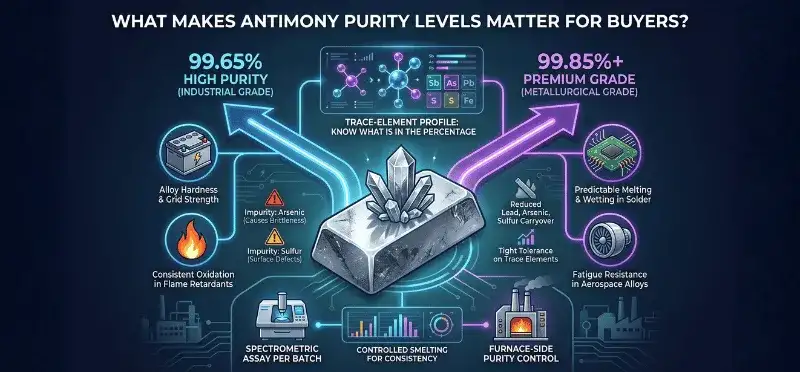
The certificate of analysis may read 99.65%. A retest performed at an independent lab may yield a lower result. If you've ever bought antimony ingots, you know that this gap is far more prevalent than you'd like to think, and more often than not, not just random. It usually stems from inconsistent smelting control, unrecorded testing operations, or a trading company selling material that was not smelted in-house.
Purity is no marketing figure. It's the difference between an alloy that stays hard and another that breaks apart under pressure, a battery grid that meets the spec and another that fails prematurely, a flame retardant that responds as expected and one that doesn't. Unless the buyer is certain of the purity level required for the application, they are forced into one of two expensive situations: paying more for a purity level they don't need, or buying less and having to readjust due to later performance failures.
Anony has been an art Jiu Sheng Metals has practiced for more than 30 years, without engaging in any trade! This distinction matters because purity is controlled at the furnace level, not on a spec sheet.
Antimony (Sb, 51) is a metalloid that finds few applications at 100% purity. The minor constituents, 0.15 % to 0.35 % depending on grade, consist of trace elements either carried over from smelting the stibnite ore or originally present in the ore: arsenic, lead, sulfur, iron, and sometimes copper or bismuth. The percentage purity does not indicate what makes up the remainder or how it behaves in your application. This is why you can get two ingots of the same "99.65% purity" and still get different results from each.
For industrial uses, antimony of 99.65% purity or greater is normally regarded as high purity, and 99.85%+ is premium, metallurgical grade. When concentrations drop below 99.65%, trace impurities such as arsenic and sulfur begin to affect the metal's hardness, oxidation resistance, and consistency, making it less suitable for precision applications such as solder or aerospace alloys.
This 0.20% gap represents a significantly lower impurity level, along with reduced amounts of arsenic, lead, and sulfur carryover from the refining process. It is suitable for general industrial applications, such as standard lead-acid batteries and flame retardants, thanks to its high efficiency (99.65%). The 99.85% grade undergoes further refining for applications where trace elements matter, such as solder wetting behavior or aerospace-grade alloys.
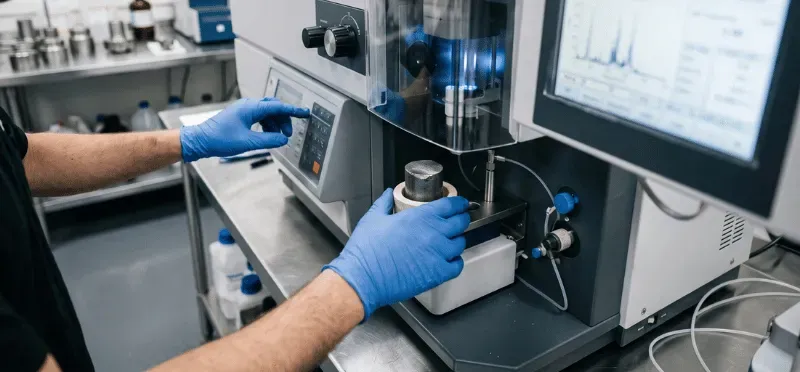
Spectrometric assay methods such as ICP-OES (inductively coupled plasma optical emission spectrometry) and, for cross-verification, fire assay techniques measure each trace element individually and not a total percentage. A reputable supplier tests each batch of product, not just samples, and can provide the raw assay data in addition to the certificate.
This is significant to more buyers than they realize. Blended "purity" numbers can conceal a problem element. It is possible to have two ingots with 99.65% total purity, one with high arsenic content and the other with high lead content, and those two impurities have very different effects on downstream applications. We perform a spectrometric assay on every batch that comes out of our furnaces, not just random samples, and we can provide third-party verification (SGS) if you require it.
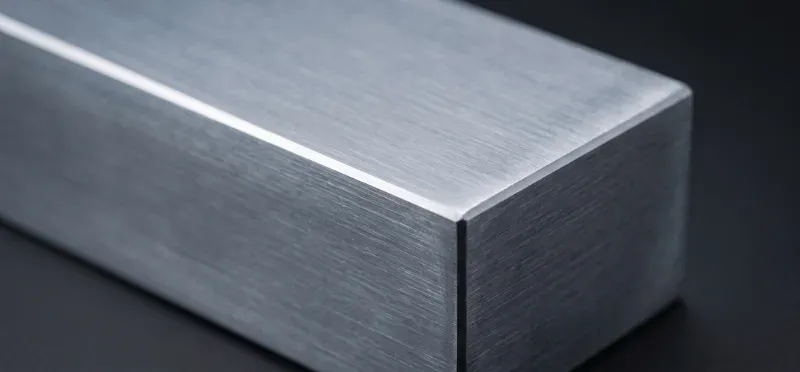
Not all impurities are the same problem. Each trace element interacts differently with the base metal and the application.
Trace impurities affect the ingot not only in terms of purity number, but also in its behavior under stress, heat, and oxidation. Arsenic causes alloy brittleness; sulfur affects surface integrity; and lead cross-contamination affects solder melting behavior. That is why the type of impurity is more important than the percentage of impurity.
In lead-acid batteries, antimony is added to the lead to strengthen the grid. Antimony impurities that cause inconsistent hardening will reduce grid strength upon repeated charging, leading to faster capacity loss. Higher controlled purity directly extends battery cycle life and discharge performance by providing predictable alloy hardness.
Depending on the end use, purity requirements vary widely. All the extra purity you purchase is an unnecessary cost, while any purity below the requirement is a risk to performance.
|
Application |
Recommended Purity Grade |
Key Impurity Tolerance |
Why It Matters |
|
Lead-acid batteries |
99.65%+ |
Low arsenic content |
Alloy hardness and grid strength for cycle life |
|
Flame retardants (antimony trioxide feedstock) |
99.65%–99.85% |
Low sulfur, low arsenic |
Consistent oxidation reactivity and product color purity |
|
Solder applications |
99.85%+ |
Minimal lead cross-contamination |
Predictable melting point and wetting behavior |
|
Aerospace alloys |
99.85%+ (ultra-high purity) |
Tight tolerance across all trace elements |
Fatigue resistance and structural reliability |
|
Photovoltaic (PV) glass |
99.65%+ |
Low iron, low arsenic |
Clarity and light transmission in glass production |
For lead-acid batteries and other general industrial alloying, 99.65% is usually enough and economical. If you need solder, aerospace, or precision applications, the higher tolerance of 99.85%+ is justified.
The certificate matters more for bulk buyers because batch-to-batch consistency is more important. Fluctuating purity from one shipment to another forces manufacturers to continually adjust downstream processes, resulting in defects, rework, and variable costs. However, consistency comes not from relying on a supplier's average purity percentage, but from using a controlled smelting facility and testing each batch.
This is a scale-and-process problem, not a chemistry problem. In our factory in Cambodia, we have 6 large-scale flat furnaces and 2 high-efficiency reverberatory furnaces, and we have produced 600 tons of antimony ingots monthly. That furnace mix enables us to control the smelting process tightly enough to maintain minimal batch variance, something a trading intermediary, who buys from a variety of unrelated smelters, can't guarantee, because he's reselling someone else's variability.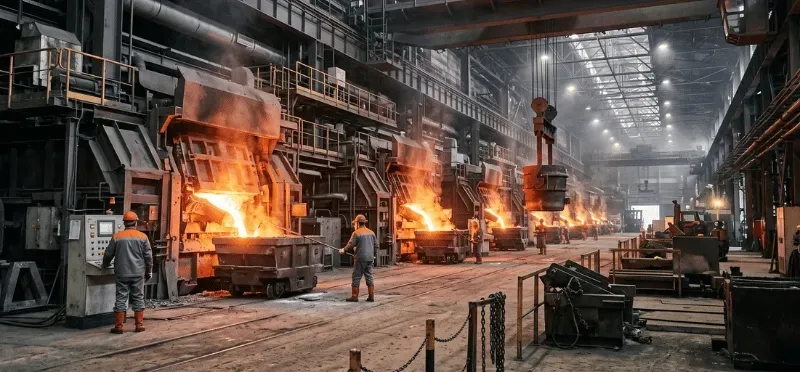
Don't accept a purity percentage for granted. Before you order, particularly in bulk, make sure to check these 4 things:
The purity number is not the red flag; it's when a supplier can't answer these questions clearly. If you need an impurity level different from what a standard catalog lists, consider working directly with a manufacturer who can adjust the refining process, such as the high-purity antimony ingot line.
Purity isn't a single number you can compare between supplier quotes; it's a trace-element profile that determines the real-world performance of your alloy, battery, or flame retardant. Buyers who understand what the percentage includes can make better sourcing decisions and avoid the high cost of an unexpected certificate failure at retest.
Our team can work directly with your application to provide custom purity antimony ingots on a batch-by-batch basis, with impurity tolerances and/or purity grades outside regular catalog specs, backed by batch-level testing and 30+ years of furnace-side experience, not a resold spec sheet.
The certificate of analysis may read 99.65%. A retest performed at an independent lab may yield a...
READ FULL

Have a question or need a quote? Fill out this form and our team will get back to you quickly!
